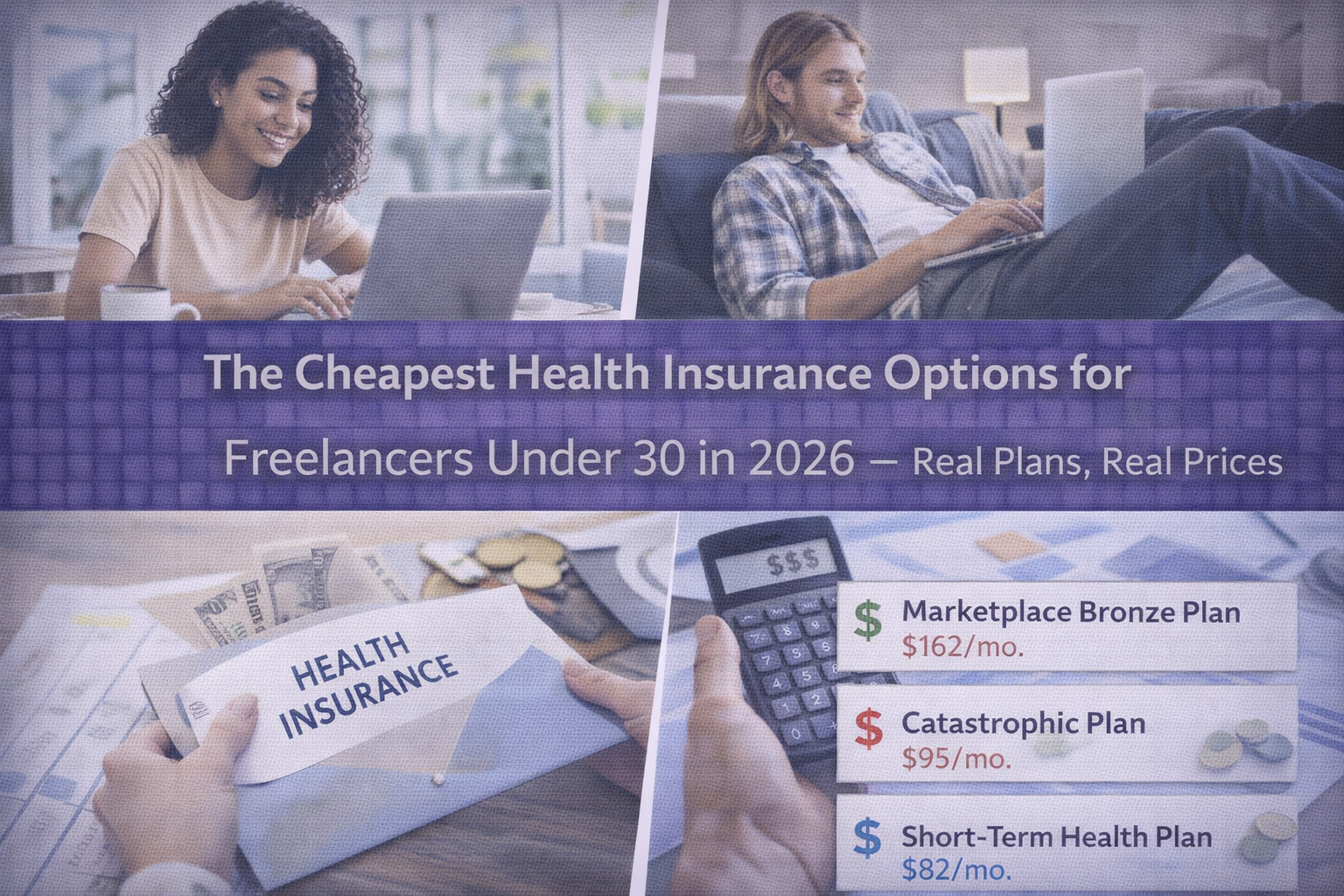
Freelancers under thirty occupy a specific position in the health insurance market that produces genuinely favorable options — options that older freelancers and higher-income self-employed people don’t have access to in the same combination. The age rating that makes health insurance expensive for fifty-year-olds works in reverse for twenty-five-year-olds, producing premiums that reflect the actuarial reality of low healthcare utilization among young healthy adults. The income levels that characterize many early-career freelancers produce subsidy eligibility that further reduces the net premium. And the health status that most people under thirty can claim produces favorable underwriting classification that maximizes the value of every coverage option.
The challenge is knowing which options to evaluate and how to compare them honestly — because the health insurance landscape for young freelancers includes everything from genuine value to strategically packaged inadequate coverage that looks affordable until a medical event reveals what it doesn’t cover. This guide covers the specific plans and price ranges that represent genuine value for freelancers under thirty in 2026.
The Marketplace Bronze Plan: The Starting Point for Income-Eligible Freelancers
The ACA marketplace Bronze plan is the starting point for any freelancer under thirty whose income falls within the subsidy-eligible range — and the combination of age-based low gross premiums and income-based subsidies produces net premiums that are genuinely difficult to undercut through any alternative coverage path.
The gross premium for a twenty-five-year-old purchasing a Bronze plan in a mid-cost market runs approximately $200 to $280 per month before any subsidies — reflecting the age rating that produces the most favorable baseline for young enrollees. For a freelancer with an income of $30,000 — approximately 240% of the federal poverty level — the premium tax credit reduces this gross premium by approximately $150 to $200 per month, producing a net premium of $50 to $100 per month for catastrophic financial protection that includes a $0 preventive care benefit and out-of-pocket maximum protection that caps annual financial exposure.
The Bronze plan’s high deductible — typically $6,500 to $8,000 for individual coverage — is the trade-off for the low premium that makes it the cheapest comprehensive option. For a healthy twenty-five-year-old whose annual healthcare usage consists of preventive visits covered at zero cost and perhaps one or two minor care events, the deductible is rarely reached and the out-of-pocket cost of the occasional medical visit is manageable relative to the premium savings compared to higher-tier plans. The financial protection that the out-of-pocket maximum provides — capping total annual exposure at approximately $9,100 for 2026 — is the genuine value that differentiates the Bronze plan from the catastrophic coverage and short-term health insurance that appear cheaper but provide less protection.
The Catastrophic Plan Option for Freelancers Under Thirty
The catastrophic health plan is a marketplace option that is exclusively available to people under thirty — an age-limited coverage tier that provides the lowest premiums in the marketplace in exchange for a very high deductible that applies to almost all medical expenses before coverage begins.
The catastrophic plan’s deductible for 2026 is equal to the ACA’s out-of-pocket maximum — approximately $9,100 for individual coverage — which means the insurer pays essentially nothing until the enrollee has spent $9,100 on covered medical expenses in a coverage year. The coverage above that threshold provides the same financial protection as any other ACA-compliant plan — 100% of covered costs after the deductible is met, with no lifetime or annual benefit maximum.
The catastrophic plan includes three primary care visits per year at a zero-cost-sharing rate before the deductible — a provision that makes the plan genuinely functional for routine care rather than being purely a financial backstop with no accessible benefits. Preventive care is also covered at zero cost sharing as with all ACA-compliant plans, which means the catastrophic plan provides meaningful access to the care that matters most for maintaining health — preventive screenings, immunizations, and the primary care visits that catch developing conditions before they become expensive.
The premium for a twenty-five-year-old catastrophic plan enrollee runs approximately $150 to $220 per month in most markets — below the Bronze plan premium but not dramatically so. The limitation that most significantly affects the catastrophic plan’s value for income-eligible freelancers is the subsidy ineligibility — premium tax credits cannot be applied to catastrophic plans, which means a freelancer who qualifies for a substantial subsidy may find that a subsidized Bronze plan produces a lower net premium than an unsubsidized catastrophic plan despite the Bronze plan’s higher gross premium.
The comparison that determines whether the catastrophic plan or the subsidized Bronze plan produces the better outcome requires calculating the net premium for each option — unsubsidized catastrophic premium versus subsidized Bronze premium — rather than comparing gross premiums that don’t reflect the subsidy’s impact. For freelancers with incomes below 250% of the federal poverty level, the subsidized Bronze plan almost always produces a lower net premium than the unsubsidized catastrophic plan.
The Silver Plan With Cost-Sharing Reductions: Underutilized by Freelancers Who Need It Most
The Silver plan with cost-sharing reductions is the most underutilized option in the marketplace for lower-income freelancers — and it’s underutilized because the subsidy calculation that makes it so valuable isn’t intuitive until the specific numbers are presented.
Cost-sharing reductions are available to enrollees whose income falls between 100% and 250% of the federal poverty level — approximately $15,000 to $37,500 for an individual in 2026. The reductions apply only to Silver plans and reduce the deductible, copayments, and out-of-pocket maximum to levels that make the Silver plan function more like a Gold or Platinum plan in terms of cost-sharing while the premium reflects the Silver plan’s lower baseline.
The specific improvement that cost-sharing reductions produce at the 200% to 250% of poverty income range — approximately $30,000 to $37,500 for an individual — is significant enough to make the Silver plan financially superior to the Bronze plan at realistic healthcare usage levels despite its higher gross premium. The enhanced Silver plan at this income level might carry a $500 deductible and a $2,500 out-of-pocket maximum rather than the standard $4,000 deductible and $7,900 out-of-pocket maximum — which produces dramatically better cost protection for a freelancer who has any regular healthcare needs.
The freelancer who selects a Bronze plan because it has the lowest premium without evaluating whether their income qualifies for cost-sharing reductions on the Silver plan may be paying the Bronze plan premium while being eligible for a Silver plan that provides significantly better cost sharing at a net premium that is higher by only $20 to $50 per month after subsidies. The cost-sharing improvement on the Silver plan typically far exceeds the premium difference for freelancers who have any regular healthcare utilization.
Medicaid: The Genuinely Free Option for Lower-Income Freelancers
For freelancers whose income falls below 138% of the federal poverty level — approximately $20,700 for an individual in 2026 in states that have expanded Medicaid — Medicaid provides comprehensive health coverage at zero premium with minimal cost sharing. The coverage quality varies by state but universally includes hospital care, physician services, preventive care, mental health services, and prescription drug coverage — the same essential health benefits that marketplace plans provide.
The Medicaid eligibility threshold that applies to freelancers is based on current monthly income rather than prior-year income — which means a freelancer whose income is variable can qualify for Medicaid during low-income months and transition to marketplace coverage during higher-income months through the special enrollment provisions that exist for income changes. Managing this transition correctly — enrolling in Medicaid when income falls below the threshold and enrolling in a marketplace plan when income rises above it — requires attention to the enrollment timelines and procedures that vary by state but that most state Medicaid agencies are equipped to handle through a streamlined application process.
The practical consideration that affects Medicaid’s value for freelancers is provider access — Medicaid’s reimbursement rates are lower than commercial insurance rates, which produces a provider acceptance rate that varies significantly by state and by specialty. In states with robust Medicaid provider networks, the coverage functions comparably to commercial insurance for most healthcare needs. In states with limited Medicaid provider networks, accessing specialists and certain services requires more navigation than commercial insurance enrollees experience.
Health Sharing Ministries: Evaluating Them Honestly
Health sharing ministries — organizations where members share each other’s medical costs through a structured program rather than purchasing traditional insurance — appear consistently in health insurance comparisons for young freelancers because their monthly share amounts can be significantly below ACA marketplace premiums.
The honest evaluation of health sharing ministries requires acknowledging both their genuine advantages and their structural limitations relative to traditional insurance. The monthly share amounts for young, healthy members can run $150 to $250 per month for coverage levels that cost $300 to $400 per month on the ACA marketplace without subsidies — a genuine cost difference that reflects the selective membership that health sharing programs maintain rather than the open enrollment that ACA plans must accept.
The structural limitations that make health sharing ministries inappropriate as a primary coverage solution for many freelancers are specific and consequential. Health sharing programs are not insurance — they have no legal obligation to pay any specific claim, and the sharing decision for each claim is made by the organization rather than determined by a policy contract that creates enforceable rights. Preexisting conditions are typically excluded or subject to waiting periods — a freelancer with a chronic condition who joins a health sharing ministry may find that condition-related expenses are not eligible for sharing. Mental health services and prescription drug coverage are handled inconsistently across programs — some include them and others exclude or significantly limit them.
The appropriate framing for health sharing ministries in the young freelancer’s coverage evaluation is as a potential option for genuinely healthy individuals with no preexisting conditions, no regular prescription needs, and no mental health service requirements — who are considering the program with full understanding that the cost sharing is voluntary rather than contractually obligated. For freelancers who meet this profile and who have evaluated a specific program’s sharing history and membership agreement carefully, health sharing can represent a legitimate cost management strategy. For freelancers who have any regular healthcare needs, the apparent premium savings carry coverage gaps that make the comparison less favorable than the monthly cost suggests.
Short-Term Health Insurance: When It Makes Sense and When It Doesn’t
Short-term health insurance is the coverage option that appears most often in low-cost health insurance searches and that produces the most significant coverage disappointments when claims reveal what the low premium actually buys.
Short-term health insurance for freelancers under thirty is only appropriate in genuinely short-term gap situations — a freelancer between projects who will have employer-sponsored coverage available within sixty to ninety days, a recent graduate in the sixty-day special enrollment window after aging off parents’ coverage who needs gap coverage while evaluating marketplace options. In these specific situations, a short-term plan’s lower premium is a reasonable cost for temporary coverage of catastrophic risks while the permanent coverage decision is being finalized.
Short-term health insurance is not appropriate as a long-term coverage strategy for freelancers who need comprehensive protection — the preexisting condition exclusions, benefit limits, and non-ACA-compliant coverage structure that make short-term plans less expensive also make them inadequate substitutes for the comprehensive coverage that ACA marketplace plans provide at net premiums that are genuinely competitive after subsidies for most income-eligible freelancers.
The Decision Process That Produces the Right Plan
The coverage decision process that produces the best outcome for freelancers under thirty follows a specific sequence that evaluates options in the order of their financial accessibility rather than their premium alone.
Starting with Medicaid eligibility — confirming whether current income falls below the Medicaid threshold in the specific state — identifies the zero-premium option before evaluating any paid coverage. If income is above the Medicaid threshold, calculating the premium tax credit for the benchmark Silver plan at the specific income level determines the subsidy amount that applies to any marketplace plan. Comparing the net cost of the subsidized Silver plan — particularly if cost-sharing reductions apply — against the unsubsidized catastrophic plan identifies which produces the lower net premium for the specific income and usage profile. Evaluating whether the self-employed health insurance deduction applies and how it affects the effective cost of the chosen option produces the final after-tax cost that represents the true out-of-pocket impact.
Finding the cheapest health insurance is one dimension of the coverage decision — choosing between the HMO, PPO, and HDHP plan structures that exist within each price tier is the other dimension that affects how the coverage actually works when healthcare is needed. Our guide on how to choose a health insurance plan without a finance degree — HMO vs PPO vs HDHP explained covers the plan structure decision in plain English so the coverage that’s selected actually functions the way the premium suggests it should.
Currently a freelancer under thirty navigating the health insurance decision for the first time — or already on a plan that felt like the right choice at enrollment but is producing higher out-of-pocket costs than expected? Leave a comment with your state, approximate income, and the plan type you’re currently on or evaluating. We’ll help you identify whether a different option would produce better total cost for your specific situation.
Leave a Reply