The question of whether insurance is worth the money is one that most financial content refuses to answer honestly — either because the answer is complicated enough to resist simplification or because the people producing the content have a financial interest in the answer being yes. This guide attempts something different: an honest examination of when insurance genuinely is worth paying for, when it isn’t, and how to think about the question in a way that produces better financial decisions than either reflexive coverage or reflexive skepticism.
The answer is not the same for every type of coverage, every financial situation, or every risk profile. Insurance is genuinely worth the money in some situations and genuinely not worth it in others — and the framework for distinguishing between those situations is more useful than a universal recommendation in either direction.
The Financial Case For Insurance: When It Clearly Makes Sense
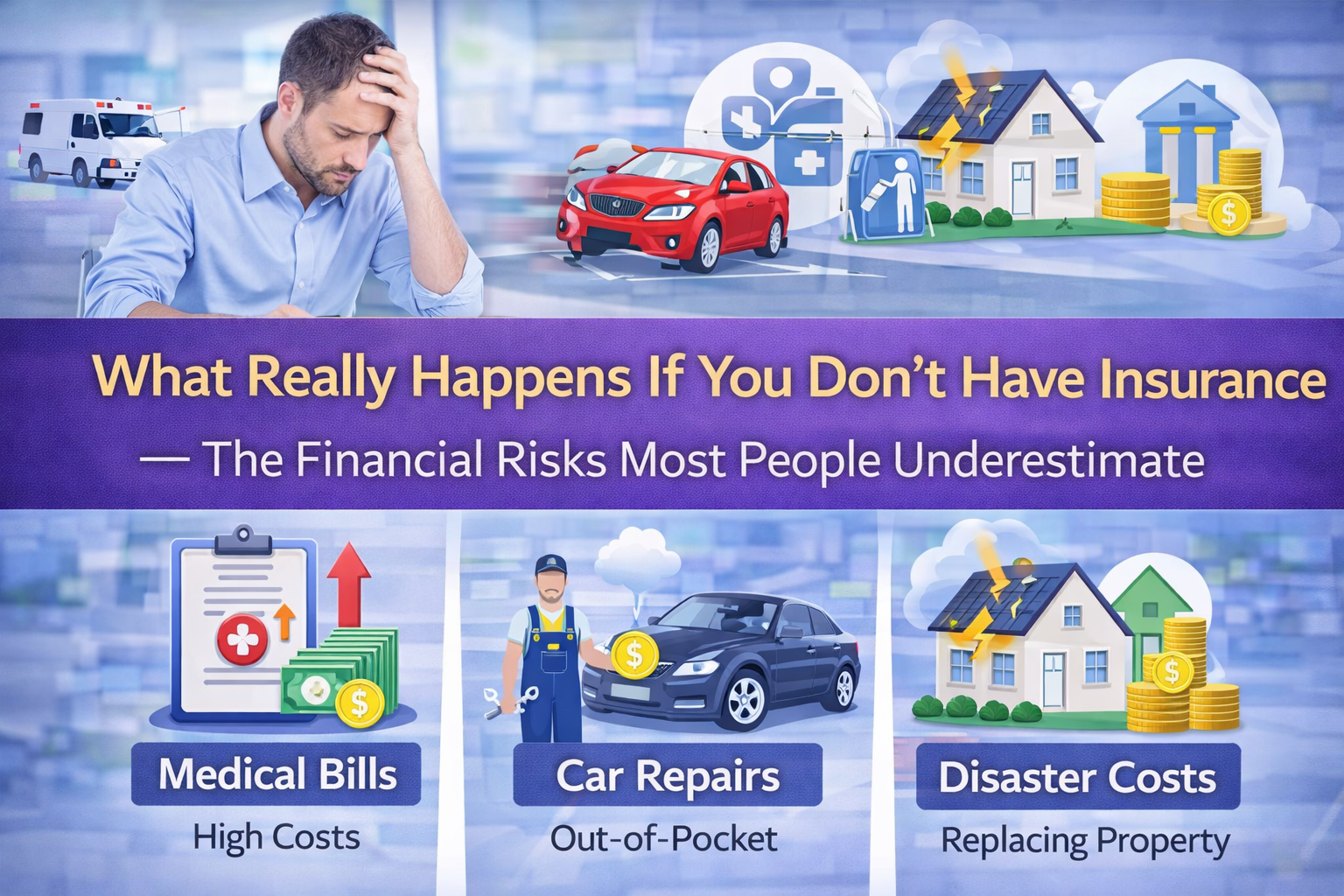
Insurance makes unambiguous financial sense when the potential loss it covers would be catastrophic relative to the policyholder’s ability to absorb it — when the gap between the worst-case outcome and the policyholder’s financial resources is large enough that paying to eliminate that gap is rational regardless of the probability of the loss occurring.
A family with $50,000 in savings and a $400,000 home cannot self-insure against the total loss of that home. The worst-case outcome — losing the home and being unable to rebuild — is financially catastrophic relative to their resources. Paying $1,500 per year to eliminate that possibility is rational even if the probability of a total loss in any given year is very small, because the downside of the uninsured outcome so dramatically exceeds the cost of the premium that the expected value calculation is not close.
The same logic applies to health insurance for most people, to liability coverage for anyone with meaningful assets, to life insurance for anyone with financial dependents, and to business insurance for any business owner whose personal finances are intertwined with the business. In each case, the potential loss is large enough relative to the policyholder’s resources that the premium represents a rational purchase regardless of probability.
The financial case for insurance is strongest when three conditions are simultaneously present. The potential loss is large relative to available resources. The probability of the loss, while not certain, is not negligible. And the policyholder cannot meaningfully reduce the probability of the loss through behavior or investment. When all three conditions apply, insurance is clearly worth buying. When none of them apply, insurance is clearly not worth buying. The interesting cases are in between.
The Financial Case Against Insurance: When It Doesn’t Make Sense
Insurance doesn’t make financial sense when the potential loss it covers is small enough relative to the policyholder’s resources that absorbing the loss directly would be less expensive than paying premiums to avoid it — or when the probability of the loss is so low that the expected value of the insurance is negative by a large enough margin to make self-insurance rational.
Extended warranties on consumer electronics are the clearest example of insurance that routinely fails this test. The premium — the warranty cost — is typically priced at 15% to 25% of the product’s purchase price. The probability that the product will fail in a way the warranty covers during the warranty period is low enough that the expected payout is well below the premium cost. And the financial impact of a product failure — replacing a $300 appliance or a $500 electronics device — is manageable for most households without insurance. The combination of high premium, low probability, and manageable loss makes extended warranties a poor financial purchase for most people most of the time.
Collision and comprehensive coverage on a vehicle whose value has declined to a low level fails the same test in a different way. If a car is worth $3,500 and the annual premium for collision and comprehensive coverage is $800, the insurance is covering a maximum potential loss that isn’t much larger than a few years of premiums. When the maximum payout approaches the cumulative premium cost over a realistic ownership period, the insurance stops representing genuine financial protection and starts representing a transaction where the expected payout is lower than the cumulative cost.
Credit card insurance — coverage that pays minimum payments if the cardholder becomes unemployed or disabled — almost always fails the financial test. The coverage is expensive relative to the benefit, the benefit applies only to minimum payments rather than the full balance, and the exclusions typically make the coverage inapplicable to the most common scenarios that would trigger a claim.
The Probability Question That Most People Get Wrong
The most common error in evaluating whether insurance is worth buying is the probability error — either overestimating the probability of a loss and buying insurance that isn’t financially justified, or underestimating the probability of a loss and going without insurance that is financially justified.
People consistently overestimate the probability of vivid, easily imagined losses — plane crashes, dramatic house fires, exotic illnesses — and underestimate the probability of mundane, statistically common losses — car accidents, slip-and-fall liability claims, ordinary medical events. Insurance marketing exploits this tendency by advertising coverage for dramatic scenarios while the actuarial reality is that most claims involve the ordinary and mundane rather than the dramatic and exceptional.
The corrective to the probability error is not developing precise probability estimates for every risk — that’s neither practical nor necessary. It’s understanding the general category of probability that applies to a given risk and evaluating coverage accordingly. Catastrophic medical events are low probability but sufficiently common across the population that the absence of health insurance is a genuine risk rather than a theoretical one. Total house fires are rare enough that the expected value of fire coverage, taken alone, is negative for most homeowners — but homeowners insurance covers the full range of property risks collectively, making the expected value calculation more favorable than any single covered peril suggests.
The Asymmetry That Makes Insurance Rational Even With Negative Expected Value
The expected value argument against insurance — that the expected payout of an insurance policy is always less than the premium, because the insurance company must profit — is technically correct and practically misleading. It correctly identifies that on average, policyholders pay more in premiums than they receive in claims. It incorrectly implies that this makes insurance a poor financial decision.
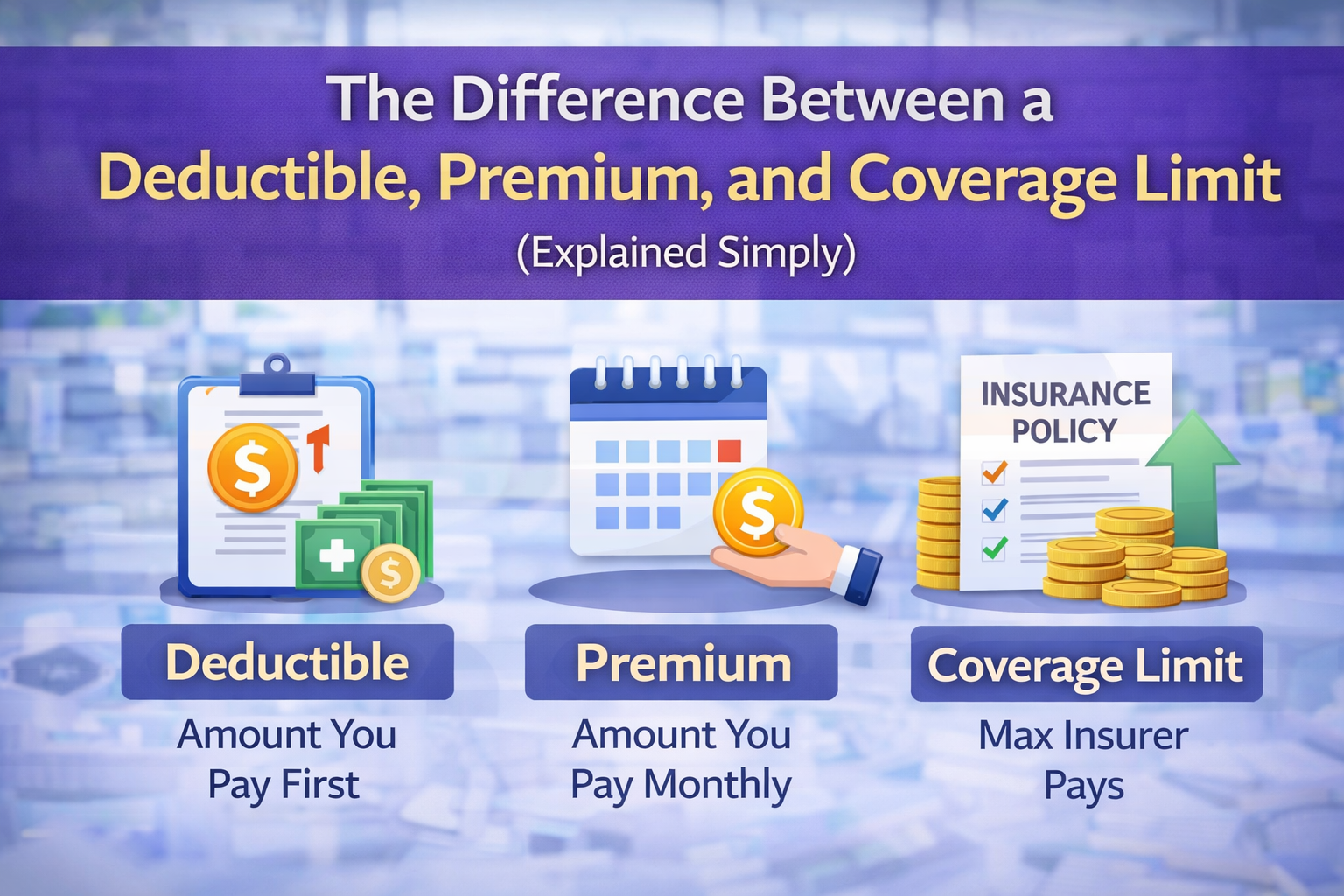
The reason insurance can be financially rational even with negative expected value is the asymmetry between what the loss costs and what the insurance costs. A $2,000 annual health insurance premium that produces a $1,600 average expected payout represents a $400 annual loss on the expected value calculation. But the same policy eliminates the possibility of a $200,000 medical bill that would financially devastate the policyholder. The $400 expected annual cost is the price of eliminating a potential outcome whose financial impact is so much larger than the premium that the negative expected value is irrelevant to the rational purchase decision.
This asymmetry is the core financial logic of insurance — and it’s the reason that insurance is rational for catastrophic risks even when it’s irrational for small ones. The utility of eliminating a catastrophic outcome is not proportional to the probability of that outcome in the way that expected value calculations assume. For most people, eliminating a 1% chance of losing everything they own is worth more than 1% of everything they own — which makes insurance rational for catastrophic risks at premiums that would be irrational for smaller risks.
The Coverage Types Worth Paying For and the Ones That Deserve Scrutiny
Applying the framework above to specific coverage types produces a clearer picture of where insurance spending is clearly justified and where it deserves more critical evaluation.
Health insurance is almost always worth buying for people who don’t have the financial resources to self-insure against a catastrophic medical event — which describes the vast majority of Americans. The premium is high, often frustratingly so, but the potential loss it covers is large enough that the purchase is rational across a wide range of financial situations.
Liability coverage — whether as part of auto insurance, homeowners insurance, or a standalone umbrella policy — is worth buying at higher limits than most people carry because the asymmetry between premium cost and potential liability is among the most favorable in the insurance market. Increasing liability limits from $100,000 to $500,000 typically costs a fraction of the premium difference you’d expect because the probability of claims reaching $500,000 is much lower than the probability of claims reaching $100,000.
Life insurance is worth buying for anyone with financial dependents whose financial security would be materially compromised by the policyholder’s death. The case against life insurance applies to people with no dependents, substantial assets that would cover survivors’ needs, or dependents who are financially independent. The case for it applies to everyone else — and term life insurance for young, healthy people is priced low enough that the financial protection it provides is among the highest-value insurance purchases available.
Property insurance on high-value assets — homes, vehicles, business equipment — is worth buying at replacement cost rather than actual cash value because the gap between what it costs to replace an asset and what an aging asset is currently worth is the gap that leaves policyholders underinsured when a major loss occurs.
The coverage types that deserve scrutiny are the ones that cover small, manageable losses at premiums that approach the expected loss value — extended warranties, rental car coverage for households with multiple vehicles, travel insurance for low-cost trips where the loss of the trip cost wouldn’t be financially significant.
The Question That Produces the Right Answer Every Time
The question that cuts through the complexity of every insurance evaluation is this: if this loss occurred today, without insurance, would it be financially catastrophic or financially manageable?
Financially catastrophic means a loss large enough to materially and durably alter the household’s or business’s financial trajectory — a loss that depletes savings, forces the sale of assets, creates debt that takes years to service, or makes continued operation impossible. For losses in this category, insurance is almost always worth buying because the premium cost of eliminating the catastrophic outcome is small relative to the impact of the outcome itself.
Financially manageable means a loss that’s painful and inconvenient but absorbable — a loss that reduces savings without depleting them, that creates a setback without creating a crisis, that requires adjustment without requiring fundamental change. For losses in this category, insurance is worth scrutinizing — the premium may exceed the rational price of eliminating a manageable loss, and self-insurance through adequate emergency savings may produce better financial outcomes than premium payments over time.
Applying this question honestly to every insurance purchase — including the coverage already in place — produces an insurance portfolio that’s neither reflexively comprehensive nor naively bare. It’s coverage calibrated to the actual financial risks that would be catastrophic without it, rather than coverage accumulated through habit, sales pressure, or the vague anxiety that more coverage is always better.
The Annual Conversation Worth Having
Insurance worth is not a one-time determination — it changes as financial circumstances change, as asset values change, and as life stage changes. Coverage that was clearly worth buying ten years ago may no longer be worth buying today, and coverage that seemed unnecessary at one life stage may become essential at another.
The annual insurance review that evaluates every policy against the catastrophic-or-manageable framework produces better long-term insurance outcomes than setting policies and forgetting them. It identifies coverage that has become redundant, limits that have become inadequate, and deductibles that no longer reflect the household’s financial resilience — and it produces adjustments that either reduce unnecessary spending or close gaps that have quietly opened as circumstances changed.
With a clear framework for when insurance is worth buying, the natural next question is which specific mistakes cause people to pay too much or get too little. Our guide on the most common insurance mistakes that cost people thousands every year covers the errors that erode insurance value across every coverage category — so you can confirm that your current coverage is working as hard as the premiums you’re paying for it.
Where do you land on the insurance-worth-it question for your own coverage — do you feel like you’re paying for protection you genuinely need, or have you started wondering whether some of your policies are covering risks you could absorb yourself? Leave a comment with the specific coverage you’re questioning. We’ll give you a direct take on whether the scrutiny is warranted.