Category: Life Insurance

  • No-Exam Life Insurance in 2026: Is the Convenience Worth the Higher Premium

    No-Exam Life Insurance in 2026: Is the Convenience Worth the Higher Premium

    No-exam life insurance — coverage that can be purchased without the traditional medical examination that fully underwritten policies require — has grown from a niche product for buyers who couldn’t or wouldn’t submit to medical testing into a mainstream option that major insurers now offer alongside their traditionally underwritten products. The growth reflects genuine improvements in the data sources that insurers use to assess risk without a physical examination, which have made the underwriting accuracy of simplified issue products competitive enough with full underwriting to justify mainstream availability.

    The question that every buyer considering no-exam life insurance needs to answer honestly is whether the convenience the product provides is worth the premium difference it typically costs — and the answer to that question is specific to each buyer’s health profile, time sensitivity, and the coverage amount being sought rather than a universal yes or no.


    What No-Exam Life Insurance Actually Is and How It Works

    No-exam life insurance is not a single product — it’s a category that includes several distinct product types with different underwriting approaches, different coverage limitations, and different premium implications. Understanding the distinctions between product types within the no-exam category prevents the mistake of comparing products that are fundamentally different under a common label.

    Simplified issue life insurance uses a health questionnaire rather than a medical examination to assess risk — a series of yes or no questions about health history, current diagnoses, medications, and lifestyle factors that the insurer uses to make a coverage decision. The questionnaire is more detailed than a general application but less comprehensive than the medical records review, blood work, and physical measurements that full underwriting includes. The insurer makes a coverage decision — approved, approved with a rating, or declined — based on the questionnaire answers and the additional data sources the insurer accesses during underwriting.

    Accelerated underwriting is a more sophisticated variant that uses data analytics to make underwriting decisions without a medical examination for qualifying applicants — combining the applicant’s questionnaire responses with prescription drug history, motor vehicle records, credit-based insurance scores, and other third-party data sources that provide risk assessment information without a physical examination. For younger, healthier applicants whose data profile supports a favorable risk assessment, accelerated underwriting produces approval decisions that match full underwriting outcomes without the examination requirement.

    Guaranteed issue life insurance provides coverage without any health questions — the application is accepted regardless of health status, and the death benefit is guaranteed as long as premiums are paid. The trade-off for the guaranteed acceptance is strict coverage limits — typically $5,000 to $25,000 — and graded death benefits during the first two to three years of coverage that pay only the premium amount plus interest rather than the full death benefit if the insured dies from natural causes before the grading period ends.


    The Premium Difference That Drives the Decision

    The premium difference between no-exam and fully underwritten life insurance varies by product type, coverage amount, and applicant health profile — and the variation is significant enough that the premium comparison requires specific quotes rather than general estimates.

    For simplified issue products, the premium premium — the additional cost above fully underwritten pricing for the same coverage amount — typically runs 10% to 40% depending on the coverage amount, the insurer, and the applicant’s health profile. The premium premium exists because the insurer accepts higher risk by not conducting the full medical examination — the applicants who would have been declined or rated during full underwriting are mixed into the simplified issue pool, which requires higher average pricing to cover the elevated average mortality risk.

    For accelerated underwriting products offered by major carriers like Haven Life, Protective, and Principal, the premium difference compared to fully underwritten products is minimal for healthy applicants who qualify for the accelerated process — sometimes zero, because the data analytics produce a risk assessment that’s accurate enough to justify standard pricing. The premium savings from accelerated underwriting come not from lower pricing but from identical pricing with a faster and more convenient application process.

    For guaranteed issue products, the premium difference compared to any underwritten coverage for equivalent death benefits is dramatic — the guaranteed acceptance that eliminates underwriting creates such an adverse selection dynamic that guaranteed issue products are priced at levels that reflect the near-certain eventual claim that results from insuring a population that includes many applicants who would be declined for any underwritten coverage. Guaranteed issue products are priced appropriately for what they provide — a last resort coverage option for buyers who have no underwritten alternative — but they are genuinely expensive relative to any coverage that involves health assessment.


    Who Benefits Most From No-Exam Life Insurance

    The buyer profiles where no-exam life insurance produces the best outcomes relative to fully underwritten alternatives are specific enough to identify clearly rather than applying the no-exam option broadly.

    Time-sensitive buyers who need coverage in place quickly — a business owner closing a loan that requires life insurance as a condition, a new parent who wants coverage before leaving the hospital, a buyer who has identified a specific financial need and wants coverage active before the situation changes — benefit from the speed of no-exam approval that ranges from same-day to seventy-two hours compared to the four to eight weeks that full underwriting typically requires. For these buyers, the premium difference between no-exam and fully underwritten coverage is the cost of speed rather than the cost of avoiding examination — and whether that cost is worth paying depends on how time-sensitive the specific situation is.

    Buyers with examination anxiety — a genuine and more common condition than most financial content acknowledges — who would defer the purchase indefinitely rather than complete a medical examination may find that the no-exam option produces coverage that actually gets purchased versus fully underwritten coverage that never gets applied for. A no-exam policy purchased and in force is superior to a fully underwritten policy that remained theoretical because the application process was never completed.

    Buyers in the older age ranges — typically sixty and above — where the accelerated underwriting data analytics are less effective at replacing full examination and where simplified issue products sometimes produce pricing that’s competitive with fully underwritten pricing in the senior market may find no-exam options genuinely comparable to the fully underwritten alternative rather than more expensive.


    Who Is Better Served by Full Underwriting

    The buyer profiles where full underwriting produces better outcomes than no-exam alternatives are equally specific — and for the majority of younger, healthier buyers considering life insurance, full underwriting is the financially superior choice despite the inconvenience it requires.

    Young, healthy buyers who would qualify for preferred or preferred plus classifications under full underwriting are the buyers who pay the largest premium premium for no-exam coverage relative to what they would pay with full underwriting — because the full underwriting process would confirm the excellent health that produces preferred classification pricing, while no-exam pricing applies conservative pricing assumptions that don’t distinguish preferred health from standard health as precisely. The twenty-eight-year-old in excellent health who purchases simplified issue coverage at a 25% premium premium over fully underwritten pricing for the same coverage is paying for a convenience that costs significantly more than the medical examination would have.

    Buyers seeking large coverage amounts — typically above $500,000 — find that the no-exam option is frequently unavailable at the coverage levels needed, because most simplified issue products cap coverage at $500,000 to $1,000,000 and guaranteed issue products cap coverage far below those levels. The buyer who needs $1.5 million in coverage to meet the DIME calculation for their specific situation has no no-exam alternative available and must complete full underwriting to obtain the coverage the financial analysis indicates is needed.

    Buyers with complex health histories who might be declined under simplified issue underwriting but would be approved with a rating under full underwriting sometimes find that full underwriting produces better outcomes — because the medical records review and physician examination that full underwriting includes can document health management and treatment success that the simplified issue questionnaire doesn’t capture. A buyer with well-managed type 2 diabetes might be declined by simplified issue underwriting due to the diagnosis alone but approved with a standard or standard plus rating under full underwriting that documents the effective management of the condition.


    The Accelerated Underwriting Sweet Spot

    The accelerated underwriting products that major carriers have developed represent the most compelling no-exam option for buyers who fall within the target profile — and identifying that profile produces the clearest guidance on when accelerated underwriting is the optimal choice rather than a compromise.

    The accelerated underwriting sweet spot is the healthy buyer between ages twenty-five and fifty who is seeking coverage of $500,000 to $3 million — the profile where the data analytics that drive accelerated underwriting are most accurate, where the coverage amounts are within the accelerated program limits, and where the speed and convenience advantages are most clearly available without a premium penalty.

    Haven Life’s InstantTerm product, Principal’s accelerated underwriting program, and similar offerings from major carriers have demonstrated that the combination of health questionnaire responses, prescription drug history, motor vehicle records, and credit-based insurance scores produces underwriting accuracy comparable to full medical examination for this profile — which justifies coverage issuance at fully underwritten rates without the examination requirement. The buyer who falls within this profile and applies to an accelerated underwriting program gets the convenience of no-exam with the pricing of full underwriting — the best of both outcomes rather than the trade-off that simplified issue products require.


    The Application Process That Determines Which Track Applies

    Most major life insurers that offer accelerated underwriting begin every application on the accelerated track and complete full underwriting only for applicants whose data profile doesn’t support accelerated approval — which means the applicant doesn’t always choose between no-exam and full underwriting but rather starts on the no-exam path and completes examination if the underwriting data requires it.

    The application that starts on the accelerated track and requires a medical examination after the initial data review produces a longer overall timeline than either pure no-exam or scheduled examination — because the data review adds a step before the examination is requested rather than scheduling the examination at application. Buyers who have specific reasons to expect that a medical examination will be required — older age, known health conditions, large coverage amounts — may find the total application timeline is more predictable if they request traditional underwriting upfront rather than starting on the accelerated track and waiting for the examination request.


    Making the Decision That Fits the Situation

    The no-exam versus full underwriting decision resolves to a clear answer for most buyers once the specific situation is assessed against the profile descriptions above.

    Young, healthy buyers seeking standard coverage amounts who are not time-sensitive should pursue fully underwritten coverage — the premium savings over a twenty or thirty year term are meaningful, the examination is a one-time two-hour inconvenience, and the preferred classification that excellent health produces is worth the process required to document it.

    Buyers who are time-sensitive, examination-averse, or in the age and coverage ranges where accelerated underwriting produces standard pricing without examination should pursue the no-exam options available from major carriers with accelerated underwriting programs — comparing the quoted rates against fully underwritten alternatives to confirm that the convenience premium, if any, is within an acceptable range.

    Buyers in health categories that are declined or heavily rated under simplified issue underwriting but potentially insurable under full underwriting should pursue full underwriting rather than assuming that the no-exam decline reflects their true insurability — because the more complete picture that full underwriting develops sometimes produces approvals that simplified issue questionnaires don’t.


    Knowing whether no-exam coverage is right for your situation is one part of the life insurance decision — knowing which health insurance options work best alongside your life insurance for comprehensive protection is the other. Our guide on the best health insurance for self-employed people in 2026 covers the coverage options that work best for freelancers and independent business owners who need both life and health protection without employer benefits to rely on.


    Applied for no-exam life insurance and found that the pricing was significantly higher than fully underwritten quotes for the same coverage — or went through full underwriting and received a rating that made you wish you had explored simplified issue options first? Leave a comment with the specific situation and coverage amount. Real application experiences help other buyers understand what to expect from each underwriting path.
  • What Happens to Your Life Insurance If You Stop Paying Premiums

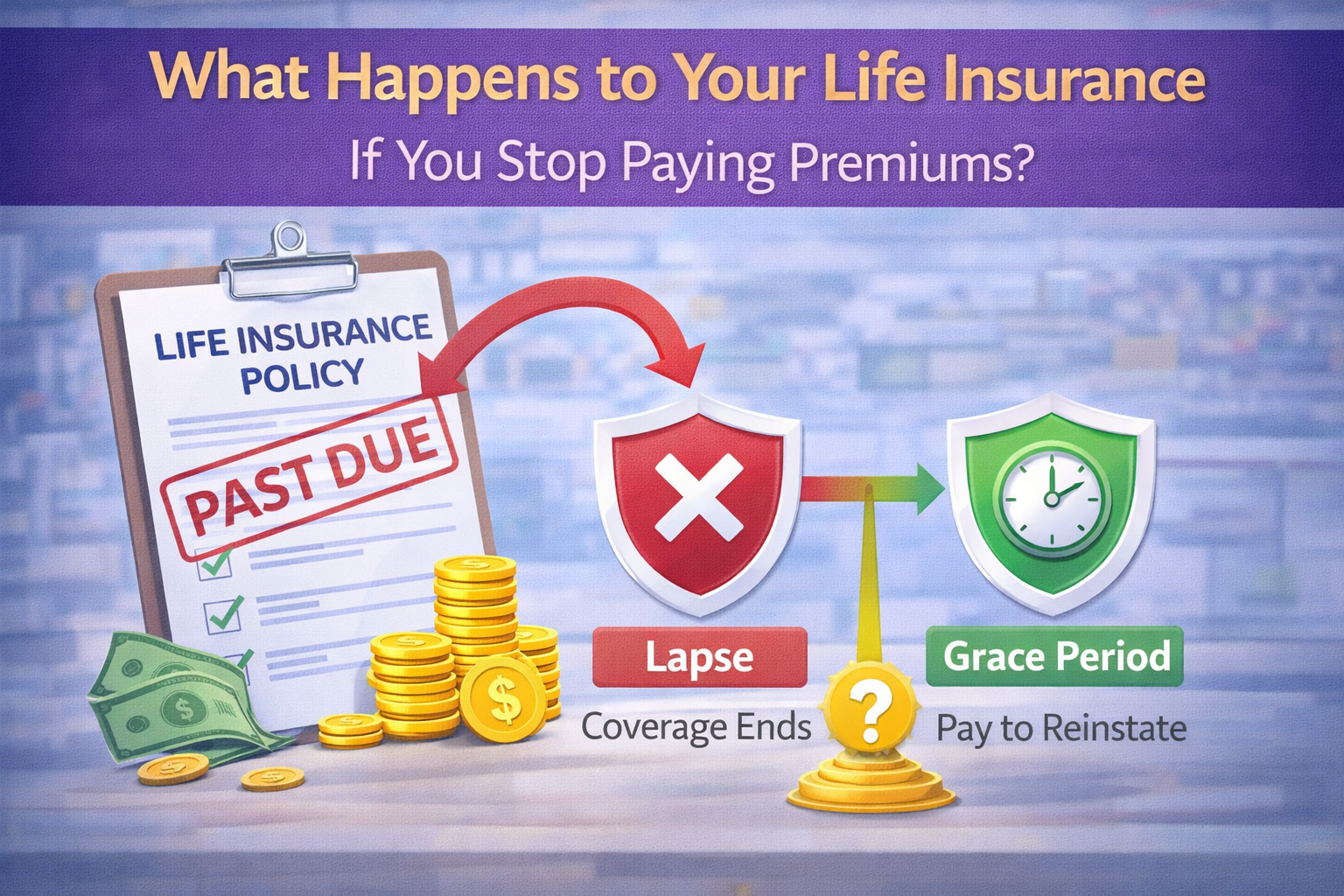
    What Happens to Your Life Insurance If You Stop Paying Premiums

    Life insurance premiums are a long-term financial commitment — a monthly or annual obligation that stretches across ten, twenty, or thirty years for term policies and potentially for a lifetime for permanent policies. Over that period, financial circumstances change in ways that occasionally make the premium payment difficult or impossible — a job loss, a medical crisis, a business failure, or simply a period of financial pressure that makes every recurring expense subject to review. Understanding what happens to a life insurance policy when premium payments stop — and what options exist to preserve coverage before the policy lapses entirely — is information that most policyholders need at some point and that most don’t have until the situation is already in progress.

    The answer depends on the type of policy — term or permanent — and the specific provisions that the policy includes. The difference between the outcomes for term policyholders and permanent policyholders who miss premiums is significant enough to address separately rather than as a single unified answer.


    What Happens to Term Life Insurance When Premiums Stop

    Term life insurance is the simpler case — the policy structure doesn’t include the cash value component that gives permanent policies additional options when premiums are missed. The term policy provides a death benefit in exchange for a fixed premium during the coverage period, and the coverage exists only as long as the premiums are paid.

    When a term life insurance premium payment is missed, the policy enters a grace period — a defined window during which the coverage remains in force despite the missed payment. The grace period is typically thirty-one days for monthly premium policies and thirty-one days for annual premium policies — long enough to catch a payment that was missed due to a banking issue, an oversight, or a short-term cash flow interruption without requiring an immediate reinstatement application.

    During the grace period, the death benefit remains fully in force — a policyholder who dies during the grace period before the missed premium is paid is covered, and the insurer pays the death benefit minus the unpaid premium amount. The grace period exists specifically to prevent coverage lapses from minor payment interruptions that the policyholder would have resolved if given a brief window, and the death benefit continuation during that window is a genuine protection rather than a technicality.

    If the premium is not paid within the grace period, the term policy lapses — coverage ends, the policy is no longer in force, and the insured has no death benefit protection. The lapse is not necessarily permanent — most term policies include a reinstatement provision that allows the policyholder to restore coverage within a specified window — typically two to five years from the lapse date — by paying all past-due premiums with interest and demonstrating insurability through a new medical review. The reinstatement provision is valuable but has two significant limitations — the accumulated past-due premiums plus interest may represent a meaningful sum for a policy that has been lapsed for several months or years, and the medical review requirement means that health changes that occurred between the original application and the reinstatement request can result in reinstatement denial if the current health status doesn’t meet the original underwriting standard.


    The Reinstatement Window and Why It Matters

    The reinstatement provision in most term policies is the option that most policyholders don’t know they have until they’ve allowed it to expire — and understanding it before a lapse occurs produces better decisions than discovering it after the window has closed.

    The reinstatement window — typically two to five years depending on the insurer and the policy form — begins at the date of lapse rather than the date of the last payment. A policyholder who allows a policy to lapse in January has until January of the second through fifth year following the lapse to apply for reinstatement rather than applying for a new policy. The significance of the window is that reinstating an existing policy restores the original underwriting classification and premium rate — the preferred plus classification obtained when the policy was originally issued continues to apply to the reinstated policy rather than the current health classification that a new application would produce.

    For a policyholder whose health has declined since the original policy was issued — who would now qualify for a standard classification rather than the preferred classification on the lapsed policy — reinstating the original policy produces coverage at the original preferred rate rather than the higher standard rate a new application would generate. The premium catch-up cost of reinstatement — past-due premiums plus interest — needs to be compared against the present value of the rate difference between reinstatement and a new policy over the remaining term to determine whether reinstatement or new application produces the better financial outcome.


    What Happens to Permanent Life Insurance When Premiums Stop

    Permanent life insurance — whole life, universal life, and variable life policies — responds differently to missed premiums than term insurance because the cash value component creates options that term policies don’t have. The specific options available depend on the policy type and the cash value that has accumulated at the time the premiums stop.

    Whole life policies are the most straightforward permanent case because the cash value accumulation is contractually defined and the nonforfeiture options that apply when premiums stop are specified in the policy contract. Nonforfeiture options are the provisions that determine what coverage remains when the policyholder stops paying premiums — and they represent one of the most significant consumer protections in permanent life insurance.

    The extended term nonforfeiture option uses the accumulated cash value to purchase a paid-up term policy with the same death benefit as the original whole life policy — extending full death benefit coverage for a period determined by the cash value amount and the insured’s current age. A whole life policy with $50,000 in accumulated cash value might purchase fifteen years of term coverage at the original death benefit amount — providing continued protection during a financial difficulty period without requiring any additional premium payment. The extended term option trades the permanence of whole life coverage for a defined period of continued full coverage funded by the cash value.

    The reduced paid-up nonforfeiture option uses the accumulated cash value to purchase a smaller permanent policy that requires no further premium payments — a permanent death benefit that is proportionally reduced from the original face amount but that never expires and requires no ongoing premiums. A $500,000 whole life policy with sufficient cash value might convert to a $150,000 reduced paid-up policy that provides permanent coverage without any additional premium obligation. The reduced paid-up option preserves the permanence of whole life coverage at a reduced death benefit amount rather than trading permanence for a full benefit over a defined term.

    The cash surrender value option allows the policyholder to receive the accumulated cash value as a lump sum in exchange for terminating the policy entirely — ending all coverage and all premium obligations in exchange for the accessible portion of the cash value. The surrender value is typically the full cash value minus any surrender charges that apply during the early years of the policy and minus any outstanding policy loans against the cash value.


    Universal Life and the Premium Flexibility That Creates a Specific Risk

    Universal life insurance introduces a premium flexibility that whole life doesn’t provide — the ability to vary premium payments within defined minimums and maximums rather than paying a fixed premium on a fixed schedule. The flexibility is a genuine advantage in normal circumstances and a specific risk when it creates the misunderstanding that low or no premium payments can continue indefinitely.

    Universal life policies accumulate cash value in a separate account that earns a credited interest rate — and the cost of insurance is deducted from that account monthly regardless of whether the policyholder makes a premium payment. When premium payments are reduced or stopped, the cost of insurance continues to be deducted from the cash value — which means the cash value declines with each monthly deduction until it’s either exhausted or the policyholder resumes premium payments.

    The risk that universal life’s flexibility creates is the policy lapse from cash value exhaustion — a scenario where the policyholder reduces premiums during a financial difficulty period and doesn’t resume adequate premiums before the cash value is depleted by the ongoing cost of insurance deductions. When the cash value reaches zero, the policy lapses — coverage ends — unless the policyholder pays the minimum premium required to prevent lapse. For older policyholders whose cost of insurance has increased with age, the minimum premium required to prevent lapse may be significantly higher than the premium paid during the low-payment period.

    The universal life lapse scenario is most common for policies that were illustrated at high credited interest rates in earlier decades — interest rate assumptions of 8% to 10% that produced projections showing the cash value remaining robust despite low premium payments. When actual credited interest rates fell significantly below those projections, the cash value growth didn’t materialize as illustrated, the cost of insurance continued at the projected rate, and the cash value depleted faster than the original illustration suggested it would. Policyholders who relied on the original illustration without monitoring the actual cash value performance discovered policy lapse risk at ages when new coverage was prohibitively expensive or unavailable.


    The Policy Loan Option That Provides a Premium Alternative

    Permanent life insurance policyholders facing temporary financial difficulty have an option that term policyholders don’t — the policy loan provision that allows borrowing against the cash value to cover premium payments during a financially difficult period without triggering the nonforfeiture provisions or the reinstatement process.

    A policy loan against the cash value is not a bank loan — it doesn’t require a credit check, it doesn’t have a defined repayment schedule, and it doesn’t create a legal obligation to repay on a specific timeline. The loan reduces the available cash value and the death benefit by the outstanding loan balance — a $20,000 loan against a $100,000 death benefit policy reduces the net death benefit to $80,000 until the loan is repaid. The interest that accrues on the outstanding loan balance is typically added to the loan balance rather than billed monthly, which means the loan can be maintained without any cash payment as long as the remaining cash value exceeds the loan balance plus accrued interest.

    The policy loan option for premium continuity works as follows — a policyholder facing financial difficulty uses a policy loan to pay the premiums that would otherwise be missed, keeping the policy in force without a cash outlay from the policyholder’s personal finances. The loan balance grows with each premium payment that the loan covers plus the interest that accrues, reducing the available cash value and the net death benefit proportionally. When the financial difficulty period ends and premium payments resume, the policyholder can repay the loan balance or allow it to remain outstanding against the cash value.

    The policy loan strategy for premium continuity is most appropriate for temporary financial difficulties — periods of months rather than years — where the cash value is sufficient to support the loan balance growth without risk of exhausting the cash value and triggering the universal life lapse scenario. For extended financial difficulties, the nonforfeiture options that reduce or eliminate the premium obligation entirely are more appropriate than the policy loan that defers the obligation without eliminating it.


    The Automatic Premium Loan Provision That Prevents Accidental Lapse

    Many permanent life insurance policies include an automatic premium loan provision — a feature that automatically uses the cash value to pay premiums when the scheduled payment is missed rather than requiring the policyholder to initiate the loan request. The automatic provision prevents accidental lapse from payment oversights or temporary cash flow interruptions without any action from the policyholder.

    The automatic premium loan provision is typically elected at policy issuance rather than activated at the time of a missed payment — which means policyholders who don’t know to elect it during the application process may not have it available when a missed payment occurs. For permanent life insurance applications, specifically requesting the automatic premium loan provision and confirming that it has been added to the policy is a worthwhile step that prevents the most common form of accidental permanent life insurance lapse.

    The provision doesn’t eliminate the loan balance accumulation that manual policy loans create — the automatic loans carry the same interest accrual and cash value reduction as manual loans. But the prevention of accidental lapse during a period when the policyholder is distracted by the financial circumstances that caused the missed payment is a genuine protection that the provision provides in exactly the scenarios where it’s most needed.


    What to Do When Premium Payment Becomes Difficult

    The action sequence that produces the best outcome when life insurance premium payment becomes difficult is specific enough to follow as a practical guide rather than a general principle.

    Contacting the insurer before missing a payment produces more options than contacting after a lapse — many insurers have hardship provisions or payment arrangements that are available for policyholders in financial difficulty if requested before the policy lapses rather than after. The hardship options that exist vary by insurer and policy type, but they exist more commonly than most policyholders know because most policyholders don’t ask before missing payments.

    Reviewing the policy provisions for grace period, nonforfeiture options, and automatic premium loan before making any decision about reducing or stopping premium payments produces an informed choice rather than a default outcome. The nonforfeiture option that’s most appropriate for a specific situation — extended term, reduced paid-up, or cash surrender — depends on the specific coverage need and the cash value available, and choosing deliberately among those options produces a better outcome than accepting the insurer’s default nonforfeiture option without comparison.

    Reinstating a lapsed term policy within the reinstatement window, rather than applying for new coverage, preserves the original underwriting classification and premium rate for the remaining coverage need — which is almost always the preferable outcome compared to a new application that reflects current age and health status.


    The next step after understanding what happens when life insurance premiums stop is understanding the no-exam life insurance options that simplify the application process for buyers who want coverage without the traditional medical examination. Our guide on no-exam life insurance in 2026 — is the convenience worth the higher premium covers the specific trade-offs between simplified issue and fully underwritten policies, with enough detail to evaluate whether the convenience justifies the cost difference for your specific situation.


    Have you faced a period where life insurance premium payments became difficult and navigated the policy loan, nonforfeiture, or reinstatement options — or discovered after a lapse that the reinstatement window was still open and used it to restore coverage? Leave a comment with what happened and how it resolved. Real experiences with these policy provisions are the most useful information available for policyholders facing the same situation.

  • Life Insurance for Young and Healthy People: Why Buying Early Saves Thousands Over Time

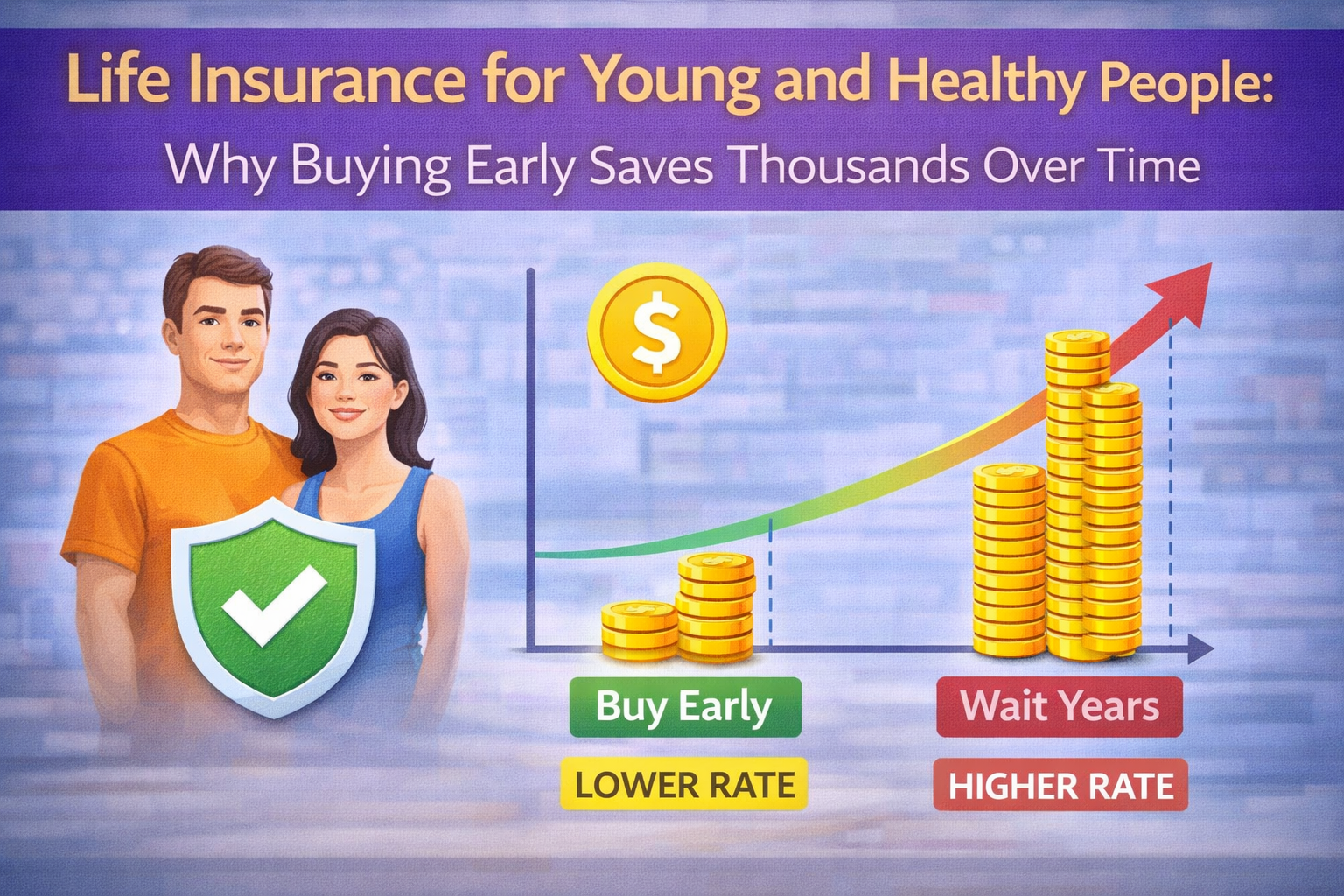
    Life Insurance for Young and Healthy People: Why Buying Early Saves Thousands Over Time

    The most common reason young and healthy people give for not buying life insurance is that they don’t need it yet — and for a specific subset of young people, that reasoning is correct. A twenty-five-year-old with no dependents, no significant debt, and no one whose financial security depends on their continued income genuinely doesn’t need life insurance in the way that a thirty-five-year-old with a mortgage, a spouse, and two children does. The insurance exists to protect financial dependents from the loss of the income they depend on — and without dependents, the protection argument is genuinely weaker.

    But the argument against buying life insurance young is not the same as the argument for waiting until the need is undeniable — and the difference between those two positions is the thousands of dollars that most people who wait unnecessarily pay in higher premiums over the full life of their coverage compared to what they would have paid if they had purchased earlier. Understanding the specific financial mechanics of the age-premium relationship, the health-premium relationship, and the insurability risk that increases with time produces a more complete picture of the young and healthy buyer’s actual situation than the simple “I don’t need it yet” conclusion.


    The Age-Premium Relationship That Makes Early Purchase Financially Compelling

    Life insurance premiums are priced primarily on mortality risk — the statistical probability of the insured dying during the coverage period — which increases with age in a predictable pattern that actuarial tables have documented across decades of claims experience. The premium for a given coverage amount increases with every year of age at application, producing a cumulative cost difference between purchasing at twenty-five and purchasing at thirty-five that is substantial enough to justify early purchase even when the financial need is less urgent.

    The specific numbers illustrate the relationship more clearly than the general principle. A healthy twenty-five-year-old non-smoking male applying for a $500,000 thirty-year term policy might pay approximately $20 to $22 per month — $240 to $264 per year. The same healthy non-smoking male at thirty-five applying for the same $500,000 thirty-year term policy might pay approximately $32 to $38 per month — $384 to $456 per year. The premium difference of $12 to $16 per month compounded over the thirty-year term represents a total premium difference of $4,320 to $5,760 for identical coverage — a difference that exists entirely because of the ten-year delay in purchase.

    The premium difference widens as the age at application increases — the gap between purchasing at twenty-five and purchasing at forty-five is significantly larger than the gap between twenty-five and thirty-five, because the mortality risk acceleration that actuarial tables document is not linear. The premium for a forty-five-year-old male purchasing the same $500,000 coverage might be $80 to $100 per month — three to four times the premium for the same coverage purchased at twenty-five. The cumulative premium difference over a comparable coverage period represents tens of thousands of dollars in additional premium cost for identical protection.


    The Health Premium Relationship That Makes Young Purchase Even More Valuable

    Age is the most predictable factor in life insurance pricing — but health status is the factor that creates the most dramatic premium differences between individuals at the same age, and the relationship between age and health creates a specific dynamic that makes early purchase more valuable than the age premium difference alone suggests.

    Health status at the time of application determines which underwriting classification the applicant receives — preferred plus, preferred, standard plus, standard, or substandard — and the premium difference between classifications is significant enough to be a meaningful financial consideration. The healthiest applicants at preferred plus classification pay approximately 40% to 60% less than standard classification applicants of the same age — a difference that reflects the mortality risk differential between excellent and average health profiles.

    The dynamic that makes young purchase particularly valuable is the correlation between age and health status — young people in their twenties and early thirties are more likely to qualify for preferred and preferred plus classifications than the same individuals will be at forty or forty-five, because the health events that degrade insurance classification — high blood pressure, elevated cholesterol, diabetes, obesity, sleep apnea — are less prevalent in younger age groups and more common in middle-aged ones. The twenty-five-year-old who is currently in excellent health and would qualify for preferred plus classification may be in a different health category at thirty-five — not because of any catastrophic health event, but because of the gradual health changes that accumulate during a decade of adult life.

    Purchasing life insurance when the health profile supports the best available classification locks in that classification for the life of the policy — the premium paid at preferred plus at twenty-five doesn’t change to reflect deteriorating health at thirty-five, because the premium is fixed at application rather than annually adjusted. The young buyer who is currently in the health category that produces the best pricing locks that pricing in for the full term regardless of what happens to health between purchase and the end of the term.


    The Insurability Risk That Most Young People Don’t Consider

    The most underappreciated argument for buying life insurance young and healthy is not the premium savings — it’s the insurability risk that increases with time. Insurability is the ability to obtain life insurance at standard rates or better — and it’s not guaranteed for everyone at every age. The health events that affect insurability are not always predictable, not always preventable, and not always minor enough to leave insurability intact.

    A cancer diagnosis, a heart attack, a stroke, a serious autoimmune condition, or a significant mental health diagnosis can make life insurance either uninsurable or insurable only at substandard rates with significant premium surcharges. These events are uncommon at any given age but become increasingly probable across a decade of life — the probability that a currently healthy twenty-five-year-old will experience a significant health event between twenty-five and thirty-five is not negligible when considered across the full range of possible events that affect insurability.

    The young person who defers life insurance purchase until the financial need is unambiguous — until there are dependents, until there is a mortgage, until the financial picture requires protection — takes the risk that the health status that currently makes them an attractive insurance applicant will still be intact when the purchase becomes urgent. The person who purchases at twenty-five, when the health profile is excellent and the premiums reflect that health, eliminates the insurability risk for the coverage purchased regardless of what health changes occur between twenty-five and the end of the policy term.


    The Financial Dependent Scenario That Changes the Calculus Immediately

    The abstract premium savings argument for early life insurance purchase becomes concrete and urgent the moment financial dependents enter the picture — and the speed with which that transition occurs is faster than most young people anticipate when they defer the purchase until the need feels immediate.

    A young couple who purchases a home with a mortgage creates a financial dependency — the surviving partner’s ability to maintain the mortgage payment and the housing stability it provides depends on the continued income of both partners. The marriage itself creates an interdependency — the financial plans that the couple has built together, including the retirement savings strategy, the housing decisions, and the lifestyle expectations, are built around two incomes and are disrupted by the loss of one.

    A pregnancy creates an immediate financial dependency that begins before the child arrives — the financial planning for the child’s arrival includes the income replacement that life insurance provides for the parent who doesn’t survive to raise the child they planned for. The couple who defers life insurance purchase until the child is born has created a dependency and taken the application risk without the coverage in place during the pregnancy — a period that typically represents months of uninsured dependency.

    The recommendation that emerges from this dynamic is to purchase life insurance at the earlier of two trigger points — the age at which the financial profile makes early purchase financially compelling given the premium savings potential, or the point at which financial dependencies make the coverage urgent. For most people, the first trigger point arrives in the mid-to-late twenties when excellent health makes coverage most affordable. The second trigger point should never arrive without the coverage already in place.


    How Much Coverage Young Buyers Actually Need

    The coverage amount calculation for young buyers follows the same framework described in the previous guide — but with specific considerations that apply to earlier life stage purchases that affect the inputs into the DIME or income replacement calculation.

    Young buyers with minimal existing financial obligations — no mortgage, no dependents, limited debt — may genuinely need less coverage than the DIME calculation produces for more financially encumbered buyers. A twenty-five-year-old purchasing life insurance primarily to lock in pricing while in excellent health might purchase a smaller initial policy — $250,000 to $500,000 — with a conversion option that allows increasing coverage without new medical underwriting as the financial obligations and dependencies grow.

    The conversion option is the feature that makes an early smaller purchase more strategically valuable than it would otherwise be — because the ability to convert term coverage to permanent coverage or to increase coverage without new underwriting allows the initial purchase to serve both the current modest need and the future larger need without requiring the buyer to re-enter the underwriting process when health may have changed.

    Young buyers who already have significant financial obligations — a mortgage, a spouse, young children — should apply the full DIME or needs analysis calculation rather than purchasing a smaller initial policy, because the financial dependency that exists today requires the coverage that addresses it today rather than a placeholder policy that will need to be supplemented later.


    The Employer Group Life Insurance Misconception

    Many young workers rely on employer-provided group life insurance as their primary or only life insurance — a reliance that creates a specific vulnerability that most don’t recognize until the vulnerability matters.

    Employer group life insurance is a valuable benefit — typically one to two times annual salary — but it has two structural limitations that make it inadequate as a standalone life insurance solution. The first is the coverage amount — one to two times annual salary is typically well below the coverage target produced by any serious needs analysis, and the gap between the employer benefit and the actual coverage need is the individual life insurance gap that employer benefits don’t address.

    The second limitation is portability — employer group life insurance coverage exists as long as the employment relationship does, and ends when the employment relationship ends. A young worker who relies entirely on employer group coverage and loses the job — whether through voluntary resignation, layoff, or disability — loses the life insurance coverage simultaneously. The COBRA continuation that extends health insurance doesn’t extend life insurance, and converting group coverage to individual coverage at separation is typically available but at rates that reflect the loss of the group pricing advantage.

    The young worker who supplements employer group coverage with an individual term policy addresses both limitations — the individual coverage fills the gap between the employer benefit and the actual coverage need, and the individual policy remains in force regardless of employment changes. The coordination of employer and individual coverage produces a total coverage level that matches the actual need without depending on the continuation of any specific employment relationship.


    The Conversation Most Young People Avoid and Why It’s Worth Having

    Life insurance purchase requires engaging with the concept of one’s own premature death — and that engagement is uncomfortable enough that many young people defer the conversation indefinitely rather than completing a purchase that would take less than an hour and that would protect the people who would be most affected by the event being contemplated.

    The discomfort is understandable and doesn’t make the deferral financially rational. The family that loses a young parent to an unexpected death in year one of the deferred period faces the financial consequence of the deferral regardless of the emotional reason for it. The premium savings that the early purchase would have produced are irretrievably lost. The insurability that existed at the time of deferral may or may not still exist at the later purchase date.

    The hour spent completing a life insurance application at twenty-five or thirty — when the health profile makes the pricing most favorable and the coverage most accessible — is an hour that produces financial protection for the people whose financial security depends on the applicant’s continued income. That protection is worth the discomfort of the conversation it requires to obtain.


    The timing of the life insurance purchase is one dimension of the coverage decision — what happens to the coverage if premiums stop being paid is another dimension that most buyers don’t think about at purchase but that affects the coverage’s reliability over the full term. Our guide on what happens to your life insurance if you stop paying premiums covers the specific policy provisions that determine what coverage remains when payments are interrupted, so the protection that was purchased doesn’t disappear unexpectedly when financial circumstances change.


    Bought life insurance young and locked in a rate you’re now grateful for — or deferred the purchase and then faced health changes that affected your insurability or your premium classification? Leave a comment with what happened. Real experiences with the timing of life insurance purchases are the most useful information available for young people who are making the same decision now.

  • How Much Life Insurance Do You Actually Need — The Formula Financial Advisors Use

    How Much Life Insurance Do You Actually Need — The Formula Financial Advisors Use

    The coverage amount decision is the most important decision in any life insurance purchase — more important than which company to buy from, more important than which term length to select, and more important than which riders to add. A life insurance policy with the wrong coverage amount is fundamentally inadequate regardless of how well everything else is configured — too little coverage leaves dependents facing financial hardship that the insurance was supposed to prevent, and too much coverage means paying premiums for protection that exceeds what the financial situation actually requires.

    Most first-time life insurance buyers select a coverage amount based on a comfortable-feeling round number — $500,000 because it sounds substantial, $1 million because it sounds comprehensive — without calculating whether that number actually covers the financial dependencies the policy is designed to protect. The round number approach occasionally produces adequate coverage by coincidence. More often it produces either significant underinsurance or moderate overinsurance — neither of which serves the policyholder’s actual financial interests.

    This guide covers the specific calculation methods that financial advisors use to determine appropriate coverage amounts — not as theoretical frameworks but as practical tools that produce specific numbers a buyer can evaluate against their actual financial situation.


    Why the Coverage Amount Matters More Than Any Other Policy Decision

    The mechanics of why coverage amount is the dominant decision in life insurance are straightforward once the purpose of the coverage is clearly defined. Life insurance exists to replace the financial contribution of the insured to the people who depend on it — the income that pays the mortgage, covers the childcare, funds the retirement savings, and provides the financial security that the family’s financial plan is built around.

    If the coverage amount is insufficient to replace that contribution for the period that it’s needed, the insurance fails at its primary purpose — the death benefit pays out, but the family still faces the financial consequences that the insurance was supposed to prevent. A policy that pays $300,000 when the actual financial need is $800,000 provides partial protection that becomes fully inadequate when the bills it needs to cover eventually exceed the benefit.

    The obverse problem — purchasing significantly more coverage than the financial situation requires — produces a premium burden that competes with other financial priorities without producing proportional protection value. Life insurance premiums spent on coverage far above what the financial analysis supports are premiums that could have funded retirement savings, emergency reserves, or other financial goals that serve the family’s financial security as effectively as insurance in the scenarios where they’re most needed.

    The calculation that produces the right coverage amount eliminates both problems — it identifies the specific dollar amount that reflects the actual financial dependency being protected rather than a number selected for its impressiveness or its affordability.


    The DIME Method: The Most Widely Used Coverage Calculator

    The DIME method — an acronym for Debt, Income, Mortgage, and Education — is the coverage calculation framework that appears most frequently in financial planning curricula and that produces a comprehensive coverage target by adding four specific financial obligations that life insurance proceeds would need to address.

    Debt represents all outstanding debts excluding the mortgage — credit card balances, auto loans, student loans, personal loans, and any other obligations that would need to be paid off or serviced without the insured’s income. The logic for including the full debt balance rather than the monthly payment is that the death benefit is a lump sum that the family can use to eliminate debts immediately rather than continuing to service them from reduced income — and eliminating the debt reduces the ongoing financial burden proportionally.

    Income represents the present value of the income stream that would be lost — typically calculated as the annual income multiplied by a factor that reflects the number of years the income would be needed and the investment return available on the death benefit proceeds. The simplest approach multiplies annual income by ten — the ten times income rule that many financial advisors use as a starting estimate. A more precise calculation uses the actual number of working years remaining and the expected investment return on the proceeds to calculate the lump sum that would generate an equivalent annual income stream through the needed period.

    Mortgage represents the remaining balance on the home loan — the amount that would need to be paid off to eliminate the largest recurring obligation from the family’s financial picture after the income loss. Including the full mortgage balance rather than the monthly payment reflects the value of eliminating the housing obligation entirely rather than continuing to make payments from reduced income.

    Education represents the estimated cost of funding the education goals for each dependent child — the college savings target that the family’s financial plan includes that would be unfunded if the contributing parent died before reaching the savings goal. The Education component is highly variable based on the number of children, their ages, and the education goals — ranging from modest community college funding to full private university costs including room and board.

    Adding these four components produces a coverage target that addresses the primary financial obligations the insurance is designed to cover. For a family with $50,000 in non-mortgage debt, a $120,000 annual income, a $350,000 remaining mortgage balance, and $200,000 in education funding goals for two children, the DIME total is approximately $1,770,000 — a coverage target that the $500,000 round number significantly misses.


    The Income Replacement Method: The Simpler Starting Point

    For buyers who want a faster starting estimate before applying the full DIME calculation, the income replacement method produces a coverage target from a single input — the annual household income that would be lost.

    The standard income replacement multiplier that most financial advisors apply is ten times the annual income for general estimation purposes — though the appropriate multiplier varies based on the specific financial situation. A primary earner in their thirties with young children and significant future earning years ahead might justify a multiplier of twelve to fifteen times income, because the income stream being replaced extends further into the future. A secondary earner in their fifties whose children are grown and whose mortgage is nearly paid might justify a lower multiplier of six to eight times income.

    The income replacement method produces a useful starting point — a family with a $100,000 income would need between $600,000 and $1,500,000 depending on the multiplier applied and the specific financial circumstances. The DIME calculation then refines this estimate by accounting for the specific obligations that the income replacement would need to cover.

    The limitation of the income replacement method is that it doesn’t account for existing assets that would contribute to covering the financial needs — a family with $500,000 in retirement savings and investments that would remain accessible after the income loss needs less life insurance to reach the same effective financial security than a family with identical income and no existing assets. The income replacement method overcalculates the coverage need for financially well-positioned families and undercalculates it for families with limited existing assets.


    The Needs Analysis Method: The Most Precise Calculation

    The needs analysis method is the most comprehensive and most precise coverage calculation — the approach that fee-only financial planners use for clients whose coverage needs are complex enough to justify a detailed analysis rather than a rule-of-thumb estimate.

    The needs analysis calculates the total financial resources available to the surviving family — existing life insurance, liquid savings, investment accounts, Social Security survivor benefits — and compares them against the total financial obligations — ongoing living expenses, outstanding debts, future education costs, and any other financial needs. The gap between available resources and total obligations is the net coverage need that additional life insurance should address.

    The Social Security survivor benefit component is the most frequently omitted variable in informal coverage calculations — and it’s a meaningful number. A surviving spouse with children is typically entitled to Social Security survivor benefits based on the deceased spouse’s earnings record, and those benefits can represent a significant portion of the income replacement need. Including Social Security survivor benefits in the available resources calculation reduces the coverage need by an amount that varies based on the insured’s earnings history and the surviving family’s composition.

    The existing life insurance component includes any employer-provided group life insurance that would continue or convert at the insured’s death — typically one to two times annual salary for employer-provided coverage. Including this existing coverage in the available resources reduces the additional coverage needed rather than ignoring it and over-purchasing individual coverage.


    The Coverage Calculation for Stay-at-Home Parents

    The most commonly underestimated life insurance coverage need is the stay-at-home parent — the partner whose contribution to the family is measured in childcare, household management, and family support rather than in earned income, and whose death would require replacing those contributions with paid services.

    The financial value of stay-at-home parent services is frequently estimated at $50,000 to $100,000 per year — the market cost of the childcare, housekeeping, cooking, transportation, and other services that the stay-at-home parent provides. A family that loses the stay-at-home parent without adequate life insurance faces the double financial pressure of reduced household services and the increased costs of replacing those services while the working parent continues their employment.

    The coverage calculation for a stay-at-home parent applies the same DIME or needs analysis framework with the replacement cost of services substituted for earned income — and typically produces a coverage target between $400,000 and $800,000 for a family with young children, depending on the specific services being replaced and the period over which replacement coverage is needed.


    The Coverage Amount for Dual-Income Households

    Dual-income households face a different coverage calculation than single-income households — because the financial impact of losing one income is significant but not as catastrophic as losing the only income, provided the surviving income is sufficient to maintain the household’s financial obligations.

    The coverage calculation for each partner in a dual-income household starts from the income replacement need for that specific income — what financial gap would be created by the loss of that partner’s specific contribution — rather than from the total household income. The mortgage, childcare, and ongoing living expenses that the household’s financial plan requires determine how much of the surviving income is available to cover those obligations and how much additional coverage is needed to fill any gap.

    The asymmetric coverage approach — higher coverage on the higher earner and lower coverage on the lower earner — is the most common approach for dual-income households and typically produces adequate protection at lower total premiums than equal coverage on both partners. The calculation that produces the right asymmetry compares the surviving income against the surviving household’s financial obligations for each scenario — loss of the higher earner and loss of the lower earner — and sizes the coverage for each to fill the specific gap that each scenario creates.


    Adjusting Coverage as Life Circumstances Change

    The coverage amount that’s appropriate at the initial purchase changes as the financial situation changes — and the periodic review that adjusts coverage to reflect current circumstances is as important as the initial calculation that determines the right starting amount.

    The life events that most commonly change the optimal coverage amount include the birth or adoption of a child, which increases the income replacement and education funding components, a significant income increase that increases the income replacement need, paying off the mortgage or significant debt that reduces the debt components, children reaching financial independence that reduces the income replacement and education components, and accumulation of significant investable assets that reduces the net coverage need by increasing available resources.

    The annual review that compares current coverage against the current needs analysis output catches these changes before they create a significant gap between the coverage carried and the coverage needed — and produces adjustments that keep the coverage appropriate rather than permanently adequate at one snapshot in time.


    Knowing how much coverage you need is the first step — finding the right company to provide it at the most competitive pricing is the second. Our guide on the best life insurance companies for first-time buyers in 2026 covers the specific insurers worth evaluating for the coverage amounts that the DIME and needs analysis calculations produce, with enough detail to match the coverage need to the company best positioned to serve it.


    Worked through the DIME calculation for your own situation and found that the coverage amount is significantly different from what you’re currently carrying — or tried to apply the needs analysis and got stuck on the Social Security survivor benefit calculation or the existing asset offset? Leave a comment with where you got stuck and we’ll walk through the specific calculation for your situation.

  • The Best Life Insurance Companies for First-Time Buyers in 2026 (Simple, Affordable, and Trustworthy)

    The Best Life Insurance Companies for First-Time Buyers in 2026 (Simple, Affordable, and Trustworthy)

    Buying life insurance for the first time produces a specific kind of confusion that’s different from other insurance purchases — the product is less familiar, the stakes feel higher because the benefit involves thinking about one’s own death, and the sales environment around life insurance has historically been aggressive enough that first-time buyers often feel pressured into decisions they don’t fully understand. The combination of unfamiliarity and pressure produces insurance purchase decisions that frequently result in the wrong product from the wrong company at the wrong price.

    This guide cuts through that confusion by focusing specifically on the experience of the first-time life insurance buyer — the person who needs straightforward information about which companies offer the best combination of accessible application processes, competitive pricing, financial strength, and coverage options that match the needs of someone buying life insurance for the first time rather than the tenth.


    What First-Time Buyers Actually Need From a Life Insurance Company

    The criteria that matter most for a first-time life insurance buyer are different from the criteria that matter for an experienced buyer who is replacing or supplementing existing coverage — and being specific about those criteria produces a more relevant evaluation than applying a generic best-in-class framework.

    Application process accessibility is the first criterion — the ease with which a first-time buyer can navigate from initial inquiry to issued policy without an unnecessarily complex medical evaluation process, confusing paperwork, or sales pressure that makes the application feel more like a negotiation than a straightforward purchase. The most accessible application processes in 2026 use online or phone-based applications with instant or near-instant decisions for qualifying applicants, minimizing the friction that causes first-time buyers to defer the purchase indefinitely.

    Pricing transparency is the second criterion — the ability to get a clear and accurate quote without providing extensive personal information before understanding the cost range, and the confidence that the quoted price will be the issued price rather than a starting point that changes during underwriting. First-time buyers who receive quotes that change significantly at policy issuance experience a trust damage that makes future insurance purchases more difficult.

    Financial strength is the third criterion — the confidence that the company will be able to pay the death benefit decades from now when the policy is most likely to be claimed. AM Best financial strength ratings provide the most reliable independent assessment of insurer financial stability, and every company on this list carries an A rating or better that reflects the reserve adequacy needed to fulfill long-term obligations.

    Coverage simplicity is the fourth criterion — the availability of straightforward term policies with clear death benefits, fixed premiums, and conversion options that allow upgrading to permanent coverage without new underwriting. First-time buyers who are presented with complex product variations before they understand the basic product make less informed decisions than buyers who start with a clear understanding of the foundational product.


    Haven Life: The Best Digital-First Option for Healthy First-Time Buyers

    Haven Life — a digital life insurance agency backed by MassMutual — has built the most streamlined online term life insurance application process available to first-time buyers in 2026. The application is completed entirely online, the decision for qualifying applicants is instant or near-instant, and the policy can be issued the same day for applicants who qualify for the no-medical-exam option — a combination of speed and convenience that most traditional life insurance companies can’t match.

    The Haven Term product is underwritten by MassMutual — one of the strongest mutual life insurers in the United States with an AM Best rating of A++ — which means the digital convenience of the Haven Life application is backed by the financial strength of an insurer with over 170 years of operating history. The combination addresses the first-time buyer’s tension between wanting a convenient digital experience and wanting confidence in the company’s long-term financial stability.

    The pricing at Haven Life is consistently competitive for the healthy, younger buyer profile that the no-medical-exam option targets most effectively. A healthy 30-year-old non-smoker can expect to pay $20 to $30 per month for a $500,000 twenty-year term policy — pricing that reflects the actuarial advantage of selecting applicants who qualify for simplified underwriting. Applicants who are required to complete a full medical examination due to age or health factors may find that the pricing becomes less competitive relative to traditional carriers that specialize in medically underwritten policies.

    The coverage options at Haven Life focus on term life with coverage amounts up to $3 million for qualifying applicants — straightforward enough for first-time buyers who are making their initial life insurance purchase and don’t yet need the complexity of permanent products or supplemental riders that experienced buyers sometimes require.


    Northwestern Mutual: The Best Option for Buyers Who Want Agent Guidance

    Northwestern Mutual consistently produces the highest policyholder satisfaction scores in the life insurance category — a performance that reflects both the financial strength of one of the most highly rated life insurers in the country and the agent-based service model that provides first-time buyers with access to knowledgeable guidance rather than a self-service application that assumes existing familiarity with the product.

    The financial strength at Northwestern Mutual is exceptional — an AM Best rating of A++ combined with over 160 years of uninterrupted dividend payments to policyholders reflects a level of financial stability that few competitors match. For first-time buyers who are purchasing life insurance to protect dependents across a thirty-year term or buying permanent coverage that needs to remain viable for fifty or more years, the financial strength of the backing company is a meaningful consideration rather than an abstract credential.

    The agent relationship that Northwestern Mutual’s distribution model centers on is most valuable for first-time buyers who have questions that a self-service application process doesn’t answer — how much coverage is actually needed, which term length matches the specific financial dependency being protected, whether a conversion option to permanent coverage is worth including at the initial purchase. A Northwestern Mutual agent who takes the time to understand the buyer’s full financial picture before recommending a specific product produces a coverage recommendation that is more likely to be appropriate than the coverage a first-time buyer selects independently on a digital platform.

    The limitation that Northwestern Mutual’s model creates for first-time buyers is the agent relationship itself — for buyers who have done enough research to know what they want and who are primarily looking for a straightforward application with competitive pricing, the agent interaction adds a step and sometimes a sales component that digital-first alternatives avoid. For buyers who genuinely benefit from guided advice, the same interaction adds value that the digital experience doesn’t provide.


    Policygenius: The Best Comparison Platform for First-Time Buyers Who Want Options

    Policygenius is not a life insurance company — it’s a digital insurance marketplace that allows first-time buyers to compare quotes from multiple insurers simultaneously rather than applying to one company and accepting or rejecting its offer without knowing what the market would have provided.

    The value that Policygenius provides for first-time buyers is the comparison visibility that individual insurer applications don’t offer — seeing how AIG, Banner Life, Protective, Prudential, and other major carriers price the same coverage profile simultaneously produces a market-rate reference point that makes the pricing evaluation more informed than any single quote provides.

    The application process through Policygenius begins with a single questionnaire that produces quotes from multiple carriers — which is a more efficient approach to market comparison than completing separate applications at each insurer. The licensed agents that Policygenius employs are available to explain the differences between quotes and help navigate the underwriting process — which provides guidance without the single-carrier bias that an individual insurer’s agent carries.

    The limitation of the marketplace model is that it doesn’t always include every carrier in every market — some insurers don’t participate in comparison marketplaces and can only be accessed through direct applications or independent agents. The comparison that Policygenius provides is comprehensive enough to establish a market-rate reference but not necessarily inclusive of every competitive option available.


    Protective Life: The Best Option for Competitive Term Pricing Across All Ages

    Protective Life consistently produces some of the most competitive term life insurance pricing in the market across a wide range of ages and health classifications — not just for young, healthy buyers where digital-first options like Haven Life are most competitive, but for buyers in their forties and fifties whose health history creates underwriting complexity that benefits from a traditional underwriting process rather than simplified issue pricing.

    The Classic Choice Term product that Protective offers provides coverage amounts from $100,000 to several million dollars with terms from ten to forty years — a range that accommodates both shorter-term specific needs and the longest-term protection needs of younger buyers purchasing coverage for the full period before retirement.

    The underwriting process at Protective is traditional — a medical examination is typically required for larger coverage amounts and older applicants — which means the application and decision timeline is longer than digital-first alternatives. The trade-off is pricing that reflects the full underwriting picture rather than the conservative pricing that simplified issue products apply to account for the unexamined health risks they accept. For first-time buyers who are healthy and whose medical examination would confirm the health status that simplified pricing assumes, the full underwriting process produces pricing that is competitive with or below simplified issue alternatives.

    The conversion option available on Protective’s term policies — the ability to convert some or all of the term coverage to permanent coverage without new medical underwriting — is among the most flexible in the industry and provides a meaningful option for first-time buyers who are uncertain whether permanent coverage will be needed later and want to preserve the ability to upgrade without facing new underwriting challenges that might exist at the time of conversion.


    State Farm: The Best Option for Buyers Who Want Life Insurance From a Trusted Brand They Already Know

    State Farm’s life insurance offering benefits from the same agent network and brand trust that produce its competitive positioning in auto and homeowners insurance — and for first-time buyers who already have a relationship with a State Farm agent through other coverage, the life insurance purchase is an extension of an existing trusted relationship rather than a new vendor selection.

    The life insurance products at State Farm include term, whole life, and universal life options that a State Farm agent can present in the context of the buyer’s existing coverage picture — identifying the coverage that complements existing financial planning rather than presenting life insurance in isolation. The integrated view that an agent who knows the buyer’s full insurance situation can provide is particularly valuable for first-time buyers who are making their initial life insurance decision as part of a broader financial review rather than in isolation.

    The pricing at State Farm for term life is competitive for the preferred and preferred plus health classifications that their underwriting prioritizes — not typically the lowest available quote in the market, but consistently within a range that reflects genuine value when the agent relationship and claims handling reputation are factored into the comparison.


    The Application Process That Most First-Time Buyers Don’t Prepare For

    The life insurance application process — regardless of which company is selected — involves underwriting questions that first-time buyers frequently don’t anticipate, and preparing for those questions before beginning an application produces a smoother and faster process.

    The health history questions that life insurance applications include are more detailed than any other insurance application — covering not just current diagnoses but family medical history, prescription medication use, mental health treatment, recent foreign travel, and participation in hazardous activities. Answering these questions accurately is both a legal requirement and a practical necessity — inaccurate answers that constitute material misrepresentation can result in policy rescission and claim denial, which defeats the entire purpose of the coverage.

    The financial underwriting component that most applicants don’t anticipate is the insurable interest requirement — life insurers verify that the coverage amount requested is proportionate to the financial loss the beneficiaries would actually experience from the applicant’s death. A thirty-year-old with a $75,000 income applying for $5 million in coverage without documented business or estate planning justification will face underwriting questions about the coverage amount that a more proportionate request wouldn’t trigger.


    The Coverage Amount Calculation That Should Precede the Company Selection

    The coverage amount calculation is the step that should precede the company selection rather than following it — because the right coverage amount for a specific situation affects which company’s products and pricing tiers are most relevant.

    The DIME method — Debt, Income, Mortgage, Education — is the most widely used coverage amount framework for income replacement needs. Adding the total debt excluding the mortgage, ten times the annual income, the remaining mortgage balance, and the estimated education cost for each child produces a coverage target that addresses the primary financial dependencies the life insurance is designed to protect. The total from the DIME calculation frequently surprises first-time buyers who haven’t previously considered the full financial impact of an untimely death on their dependents — and the surprise is valuable because it produces a coverage decision based on actual financial need rather than the comfortable-feeling round number that many first-time buyers select without calculation.


    With an understanding of which life insurance companies are worth considering for a first purchase, the next question is how much coverage is actually enough. Our guide on how much life insurance do you actually need — the formula financial advisors use covers the specific calculation that produces the coverage amount that genuinely protects dependents rather than the comfortable round number that most first-time buyers select without analysis.


    Currently shopping for life insurance for the first time and finding that the quote you received from one company is significantly different from another for the same coverage — or trying to understand whether the no-medical-exam option is worth the typically higher pricing it produces? Leave a comment with the specific situation and we’ll help you understand whether the difference reflects underwriting categories, product types, or a pricing discrepancy worth investigating further.

  • Term Life vs Whole Life Insurance: Which One Is Actually Worth Buying in 2026 (Honest Comparison)

    Term Life vs Whole Life Insurance: Which One Is Actually Worth Buying in 2026 (Honest Comparison)

    The term life versus whole life debate is one of the most persistent and most distorted conversations in personal finance — distorted because the people who explain whole life insurance most enthusiastically are often the insurance agents who earn the highest commissions selling it, and the people who dismiss whole life most categorically are often financial commentators whose advice is accurate for most situations but applied too broadly to cover the specific cases where whole life provides genuine value. The honest comparison requires examining both products on their actual merits for specific use cases rather than accepting either the sales pitch or the categorical dismissal.

    The starting point for that honest comparison is understanding what each product is actually designed to do — because term life and whole life are built to solve different financial problems, and evaluating one against the criteria that the other is designed to meet produces a misleading comparison.


    What Term Life Insurance Actually Is

    Term life insurance is pure death benefit protection — a contract that pays a specified amount to the beneficiaries if the insured dies during the policy term and pays nothing if the insured outlives the term. The product is straightforward in design because its purpose is straightforward — providing financial protection for the people who depend on the insured’s income during the years when that dependence is most significant.

    The term options that most life insurers offer range from ten to thirty years in five-year increments — a ten-year term, fifteen-year term, twenty-year term, twenty-five-year term, and thirty-year term. The term selection reflects the period during which the financial dependency the insurance is designed to protect exists — a family with young children and a thirty-year mortgage needs protection for a longer term than a couple in their fifties whose children are grown and whose mortgage is nearly paid.

    The premium on a term policy is fixed for the entire term — a thirty-year-old healthy male who purchases a $500,000 twenty-year term policy pays the same premium in year twenty as in year one. The fixed premium reflects the insurer’s pricing of the death benefit risk across the full term at the time of application rather than annually-renewing pricing that increases with age. This fixed premium structure is the feature that makes term life most affordable during the early years of a term — which are typically the years when the financial protection is most needed and when household budgets are most constrained by mortgages, childcare costs, and other financial obligations.

    The premium cost comparison between term and whole life for equivalent death benefits reflects the fundamental difference in what each product covers — a healthy thirty-year-old might pay $25 to $35 per month for a $500,000 twenty-year term policy. The same death benefit in a whole life policy might cost $300 to $500 per month. The price difference is not because one insurer is more expensive than another — it reflects the fundamentally different products behind the death benefit.


    What Whole Life Insurance Actually Is

    Whole life insurance is a permanent death benefit combined with a cash value savings component — a contract that pays the death benefit whenever the insured dies, regardless of age, and that accumulates a cash value over time that the policyholder can borrow against or surrender for cash value.

    The permanent death benefit is the feature that distinguishes whole life from term — the coverage doesn’t expire at the end of a term period, and the premium doesn’t increase with age. A whole life policy purchased at thirty continues to provide coverage at eighty, ninety, and beyond — as long as the premiums are paid. The permanence of the coverage is the feature that serves the specific use cases where whole life provides genuine value rather than theoretical appeal.

    The cash value component accumulates through a portion of each premium payment being credited to a savings account within the policy — earning a guaranteed minimum interest rate set by the insurer, potentially supplemented by dividends from mutual insurance companies that share underwriting profits with policyholders. The cash value grows tax-deferred — meaning no income tax is owed on the growth as it accumulates — and can be accessed through policy loans at any time without triggering the income taxes that other tax-deferred accounts require on withdrawal.

    The cash value growth rate that whole life provides is modest compared to historical equity market returns — typically 2% to 4% guaranteed, potentially higher with dividends. The modest return is the most common basis for the financial commentator’s dismissal of whole life as an inferior investment — and for the majority of policyholders who are considering whole life as an investment vehicle rather than as insurance with a savings component, the dismissal is accurate. Comparing whole life’s cash value growth against equity market returns consistently produces a result that favors investing the premium difference in low-cost index funds rather than purchasing whole life.


    The Cases Where Term Life Is Clearly the Right Choice

    The financial situations where term life is clearly the more appropriate product cover the majority of life insurance buyers — and being specific about those situations produces a clearer decision framework than the general recommendation to “buy term and invest the difference” that most financial content offers.

    Income replacement for dependents during the working years is the primary life insurance use case — and it’s a use case that term life addresses precisely. A family whose financial security depends on one or two incomes needs protection against the loss of those incomes during the years when the children are dependent, the mortgage is being paid, and the retirement savings haven’t yet reached the level that makes the family financially independent. A twenty or thirty year term policy covers that specific window at a cost that doesn’t compete with other financial priorities.

    Mortgage protection is a specific income replacement scenario where term alignment is particularly natural — a thirty-year mortgage is most efficiently protected by a thirty-year term policy that provides coverage through the final mortgage payment. The coverage the family needs to pay off the mortgage in the event of the primary earner’s death exists for exactly the period the mortgage exists, and the premium cost doesn’t continue beyond the period of need.

    Business succession needs — key person insurance, buy-sell agreement funding — frequently use term coverage because the business dependency that the coverage addresses has a defined time horizon. A business partnership protected by a buy-sell agreement funded with life insurance needs that coverage while the partnership exists and the partners have the ages and health profiles that make the coverage relevant — a defined period that term coverage addresses efficiently.


    The Cases Where Whole Life Provides Genuine Value

    The financial situations where whole life insurance provides genuine value rather than theoretical appeal are more specific than the general pitch that whole life is better because it never expires — and being specific about those situations produces a more honest evaluation of the product’s appropriate role.

    Estate planning for high-net-worth individuals uses permanent life insurance as a tool for managing estate tax liability — life insurance death benefits are generally income-tax-free to beneficiaries and, when structured correctly through an irrevocable life insurance trust, can be excluded from the taxable estate. For individuals whose estates will exceed the federal estate tax exemption and who want to provide liquidity to pay estate taxes without forcing the sale of illiquid assets, permanent life insurance provides a funding mechanism that term insurance can’t — because term insurance may expire before the death that triggers the estate tax liability.

    Final expense coverage for individuals who want to ensure that end-of-life costs don’t fall on survivors uses small whole life policies — typically $10,000 to $25,000 — to create a guaranteed fund for funeral and burial expenses regardless of when death occurs. For older individuals who have limited insurability and who want the certainty of permanent coverage for a specific and predictable financial obligation, the whole life product’s permanence has practical value that term insurance’s expiration doesn’t provide.

    Special needs planning for families with dependents who will never achieve financial independence uses permanent life insurance to fund a special needs trust that provides for the dependent’s care throughout their lifetime — a care need that doesn’t have a defined end point that term insurance could match. The permanent death benefit that whole life provides for an indefinite future obligation is precisely what the use case requires.

    Certain business planning scenarios — executive compensation arrangements, deferred compensation funding, corporate-owned life insurance programs — use the cash value component’s tax characteristics in ways that produce genuine planning advantages for the specific structures involved.


    The “Buy Term and Invest the Difference” Argument — Where It Works and Where It Doesn’t

    The most common financial advice for the term versus whole life decision is to buy term insurance for the death benefit need and invest the premium difference in low-cost index funds rather than accepting the modest returns that the whole life cash value provides. This advice produces the best outcome for the majority of people making the decision and produces suboptimal outcomes for a specific minority.

    The advice works well for people who will actually invest the difference — who have the discipline and the financial infrastructure to direct the premium savings into a consistent investment program that accumulates over the term period. For these individuals, the arithmetic consistently favors the combination of term insurance and index fund investing over the same financial commitment directed into whole life premiums.

    The advice produces suboptimal outcomes for people who won’t invest the difference — who will spend the premium savings rather than invest them and who will therefore not accumulate the alternative financial cushion that the buy term and invest the difference strategy assumes will exist. For these individuals, the forced savings discipline that whole life’s cash value component represents — where a portion of every premium builds accessible financial value regardless of the policyholder’s investment discipline — produces a better outcome than the theoretically superior strategy that doesn’t get implemented in practice.

    The advice also produces suboptimal outcomes for the specific use cases described above — estate planning, special needs planning, and certain business applications where the permanent death benefit’s characteristics produce planning advantages that the term and invest strategy can’t replicate.


    The Decision Framework That Produces the Right Answer for Each Situation

    The decision between term and whole life resolves to a clear answer for most people once two honest assessments are made.

    The first assessment is whether the life insurance need has a defined time horizon — a period during which the death benefit is needed after which the financial dependency that the coverage addresses will no longer exist. Income replacement for dependents has a defined horizon — the children grow up, the mortgage gets paid, the retirement savings reach the level that makes the family financially independent. If the life insurance need has a defined horizon, term insurance matched to that horizon is the more efficient solution.

    The second assessment is whether the specific use cases where whole life provides genuine value apply to the current situation — estate planning above the federal estate tax exemption, special needs dependent care, specific business planning structures. If none of these apply, the combination of term insurance and consistent investing produces better outcomes for the large majority of people making the comparison.

    The situations that genuinely require whole life are real and specific — but they’re less common than the sales process for whole life implies and less rare than the categorical dismissal that some financial content produces. Understanding the actual use cases produces a decision that’s right for the specific situation rather than one that’s based on either the sales pitch or the counter-pitch.


    Understanding which type of life insurance is right is the first decision — finding the specific companies that provide the best combination of pricing and financial strength for that type is the second. Our guide on the best life insurance companies for first-time buyers in 2026 covers the insurers worth evaluating for both term and whole life coverage, with enough specific comparison to identify which company’s product fits each buyer’s profile most effectively.


    Have you navigated the term versus whole life decision for your own situation and found that the conventional advice did or didn’t apply to your specific circumstances? Leave a comment with the factors that drove your decision. Real experiences with specific life insurance situations are more useful than any general comparison for the people facing the same decision.